Glass doors in Chelsfield do three jobs at once: they bring daylight into rooms that were never designed for it, they cut heat loss compared with the tired timber or early uPVC units they replace, and they add proper security to the back of the house. We fit sliding, bi-fold, French and frameless internal doors across the district, using thermally broken aluminium, steel-look or uPVC frames with argon-filled double or triple glazing and multi-point locking as standard. Privacy comes from tints, obscure interlayers or switchable glass. Below we explain how to specify the right system for a Victorian terrace, a 1930s semi or a modern flat.
Key insights
- The right glass door for a Chelsfield property depends on the building: heritage-style profiles for period houses, slim aluminium for contemporary homes and shops.
- Sliding, bi-fold and French doors trade opening width against swing space, sightlines and cost; frameless internal doors are a separate category for room dividers.
- Security comes from laminated or toughened glass to BS EN 12600, multi-point locks and cylinders tested to PAS 24, not from the glass alone.
- Thermally broken frames, low-E double or triple glazing and warm-edge spacers are what get a door under the Part L limit of 1.4 W/m²K.
- Before ordering, check lintels, threshold levels, drainage and whether your Chelsfield street sits in a conservation area or under an Article 4 Direction.
Why Glass Doors Work for Chelsfield Homes and Shops
Most housing in Chelsfield was built before anyone cared about garden views: narrow rear reception rooms, a kitchen in the outrigger and a single door to the yard. Replacing that door, or the back wall of an extension, with a well-specified glass door changes how the ground floor is used. You get light in the darkest part of the house, a link to the garden and, with a thermally broken frame and low-E glass, a unit that satisfies Approved Document L and the security expectations of Part Q.
Noise and privacy are the two objections we hear most, and both are solved at the specification stage. A laminated acoustic interlayer takes the edge off traffic on the main roads through Chelsfield, and the same laminate makes the door much harder to break through. For street-level shops or overlooked houses, switchable smart glass, a fritted band or a light tint controls sightlines without turning the glazing into a blank wall. Toughened or laminated panes also mean fewer breakages, which keeps running costs predictable for landlords and facilities teams.
Main Types of Glass Doors for Chelsfield Properties
The first decision on a Chelsfield job is whether you need an external door or an internal one, because the two are engineered differently. External sliding patio doors are built for weather, security and heavy daily use, so the emphasis is on thermal performance, locking hardware and track quality. Internal frameless doors divide space without losing light, so the priorities shift to hinge engineering, minimal fittings and the correct safety glass for a partition.
Sliding Patio Glass Doors
A sliding door looks simple from the garden, but it is a load-bearing, weather-resisting assembly that has to stay square and run smoothly for twenty years. We compare frame materials (aluminium, uPVC or composite) against the opening width and site exposure, because a large panel on a windy corner plot in Chelsfield needs a stiffer profile than a sheltered terrace. Stainless steel rollers on a hardened track keep a heavy panel moving freely.
For the glass we recommend warm-edge double or triple glazing with a low-E coating and argon fill, which keeps winter heat in while letting useful solar gain through. If overlooking is an issue, integral blinds, switchable glass or a quality privacy film all work without cutting daylight noticeably.
Keeping a slider working is housekeeping: vacuum grit out of the track, keep the weep holes open, check gasket compression each autumn, and have the sash realigned if it starts to catch. Neglected tracks are the main reason rollers and locks fail early.
Frameless Internal Glass Doors
Inside the home, frameless glass doors are the cleanest way to separate a hallway from a kitchen or an office from a living room without blocking light. The usual build is 10 mm or 12 mm toughened glass (laminated where sound control matters), hung on patch fittings or precision pivots fixed into solid masonry or a steel head, so the door stays rigid with almost no visible ironmongery.
The points we work through with you are:
- Hardware: pivot or wall-hung hinges, soft-close dampers, floor springs and hold-open options for busy shop or office doors.
- Privacy: clear, acid-etched, switchable or banded glass, plus the manifestation markings required on large clear panes.
- Upkeep: low-iron glass for colour accuracy, hydrophobic coatings to shed fingerprints and limescale, and junctions that avoid silicone staining.
Done properly, a frameless door suits the open-plan refurbishments common across Chelsfield while meeting the safety standards a partition needs.
Sliding, Bi-Fold or French Glass Doors?
Choosing between sliding, bi-fold and French doors for a Chelsfield house is a choice about how you want the opening to behave day to day. Each system stacks or swings its panels differently, has its own threshold detail and shows a different amount of frame, which affects both light and usable floor space. Think about how often the door will stand open, how wide a clear opening you need for furniture or wheelchair access, and how the internal floor meets the patio.
Comparing Door Opening Styles
The mechanics of each style decide where the wear happens and what the door costs to keep in good order, so it helps to understand them before comparing quotes. A door is something you will operate thousands of times, and the hardware spec matters as much as the glass.
- Sliding doors carry the panel weight on rollers in a track, so bearing quality, track alloy and frame finish decide how smoothly they run after years of use.
- Bi-fold doors depend on reinforced stiles and heavy-duty hinges to resist twisting as the panels fold back and forth.
- French doors hang from conventional hinges and rely on strong fixings and multi-point locks to stop the sashes dropping or leaking air, while keeping the symmetry period houses want.
Space, Light And Access
In Chelsfield, where gardens are narrow and rooms compact, the swing or stack zone matters as much as the glass area. A sliding door takes no floor space when open, ideal where a dining table sits close to the opening, but the clear opening is only half, or at best two thirds, of the total width.
Bi-folds open almost the full width and make the garden part of the room, but you need to plan which way the panels stack, where they park and how the threshold drains. They carry more hinges and seals, so budget for occasional servicing.
French doors suit openings under about two metres: good ventilation, a traditional look and a modest price. The swing arc needs clear space inside and can limit furniture layouts and privacy in a tight terrace.
Safety and Security Features for Chelsfield Glass Doors
Rear doors are a common break-in point on Chelsfield homes, so security has to be designed in from the start. We fit glass classified to BS EN 12600, either toughened (which crumbles safely) or laminated (which stays in the frame after an impact), so the door protects people inside and resists forced entry.
The hardware is where most of the security actually lives, and it can be specified without spoiling the look of the door:
- Multi-point locks with steel keeps, anti-snap cylinders and hinge-side bolts so the door cannot be levered or lifted off its track.
- Laminated glass with a PVB interlayer, which slows an intruder down and works with glass-break sensors on an alarm system.
- Tinted or obscured interlayers, or carefully placed solid panels, so expensive kit inside a home or shop is not on display from the street.
Energy-Efficient Glass Doors for Chelsfield’s Climate
Our winters are mild rather than harsh, but the heating season still runs for the best part of seven months, and a large glazed door is the biggest heat-loss element in most rear elevations. The goal is a whole-door U-value comfortably below the 1.4 W/m²K Part L limit, with a coating that lets daylight through while reflecting heat back into the room.
That means argon-filled double or triple glazing, warm-edge spacer bars and an aluminium frame with a polyamide thermal break, or a multi-chambered uPVC profile. Compression seals around the full perimeter stop the draughts that make a room feel cold even when the glass performs well, and that is where much of the saving on bills comes from.
On south- or west-facing gardens, a solar-control coating keeps summer afternoons bearable, and a simple overhang, pergola or external blind reduces peak heat without losing the free winter warmth.
Style Ideas for Period and Modern Chelsfield Homes
The streets of Chelsfield mix Victorian and Edwardian houses with interwar semis and recent infill, so there is no single right look for a glass door. For older houses we look at profile depth, glazing bars and ironmongery that sit comfortably with existing brickwork and sash windows. For contemporary properties and extensions, slim frames and flush thresholds suit the architecture. Many projects fall in between, pairing traditional proportions with larger panes so the new work reads as a deliberate addition.
Honouring Original Period Features
Plenty of Chelsfield houses still have their cornices, cast-iron fireplaces and original sashes, and a glass door can pick up those details rather than ignore them. Treat the new glazing as one more chosen element in a sympathetic refurbishment, not a modern intrusion to be tolerated.
Our approach for period properties is to:
- Use slim thermally broken aluminium or steel-look profiles that mimic traditional sightlines while giving a bigger glazed area and longer service life.
- Add applied glazing bars that line up with the existing sash divisions, so proportions and shadow lines stay consistent across the elevation.
- Choose glass with character where it suits, such as low-iron or softly textured laminates, while building in acoustic interlayers and low-E coatings.
Sleek Minimalist Contemporary Designs
At the other end of the scale, glass doors are the simplest route to a pared-back modern interior, in a converted Victorian terrace as much as a new Chelsfield apartment block. Ultra-slim aluminium frames, a flush threshold and concealed hinges give you an uninterrupted view and a wall that is mostly glass.
Where privacy matters, acid-etched or satin glass can be graded so a bathroom or bedroom is screened while still filling with soft light. South-facing rooms benefit from a light tint to tame glare without heavy curtains. For a gallery-like feel, consider an oversized pane, a floor-to-ceiling pivot door and low-iron glass, which removes the green edge of standard float glass.
Blending Traditional And Modern
Because one Chelsfield street can hold a Victorian villa, red-brick terraces and a new-build corner block, we often use glass doors to tie old and new parts of a home together. The brief is the same each time: keep the light, manage privacy and hit the thermal numbers without fighting the original architecture.
-
Victorian and Edwardian houses: slim aluminium frames with etched glass to screen a narrow side return or hallway while still lighting it properly.
-
Red-brick terraces: steel-look internal doors with a subtle tint to divide an open-plan ground floor into zones without making it feel smaller.
-
New builds and loft conversions: full-height sliding panels in low-iron glass, lined up with the garden view and specified with g-values and U-values that satisfy Part L and any planning conditions.
Checks Before Installing Glass Doors: Structure and Access
A wide glass door in Chelsfield usually means enlarging an opening, so the structure is checked first. We look at the lintel or steel over the opening, the slab the door sits on and the masonry either side, confirming the load path is sound, deflection will stay within what the door system allows, and there is something solid to fix tracks, pivots or patch fittings into. For bigger openings a structural engineer will size a new beam.
We also assess exposure: a door facing the prevailing wind or a busy road needs hardware and finishes that cope with weather and grime. Threshold levels are measured against the inside floor and the patio so water drains away and there is no trip at a level-access door.
Finally, we plot the swing or sliding path against room use, escape routes and deliveries, and make sure any automation or sensors have power and a sensible place to connect.
Planning Rules for Glass Doors in Chelsfield
Once the building can take the door, the next question is consent. Most rear glass doors on houses in Chelsfield fall under permitted development, but anything that changes a front or side elevation, affects an escape route or overlooks a neighbour deserves a closer look. In a conservation area, on a listed building, or where an Article 4 Direction applies, even a like-for-like change can need a formal application.
The points to run through are:
- Permitted development limits: changes to the frontage, the proportion of glazing on an elevation and whether the works go with a change of use.
- Building Regulations: Part B for fire and escape, Part K for safety glazing in critical locations, Part L for thermal performance and Part M for level access.
- Practical implications: how the door will be kept secure, cleaned and maintained over time, which conservation officers do ask about on larger commercial frontages.
Glass Door Costs in Chelsfield (And What Drives Them)
Quotes for glass doors in Chelsfield vary a great deal, and the gap usually comes down to four things: glass specification, performance, installation complexity and supply conditions. On the glass side, thicker panes, acoustic laminates, low-E and solar-control coatings add to the price but extend the comfort and life of the door.
Performance comes next. A laminated, PAS 24 tested door set with anti-snap cylinders costs more than a basic toughened unit, and privacy options widen the range: switchable glass or a fritted pattern is a step up from a satin finish.
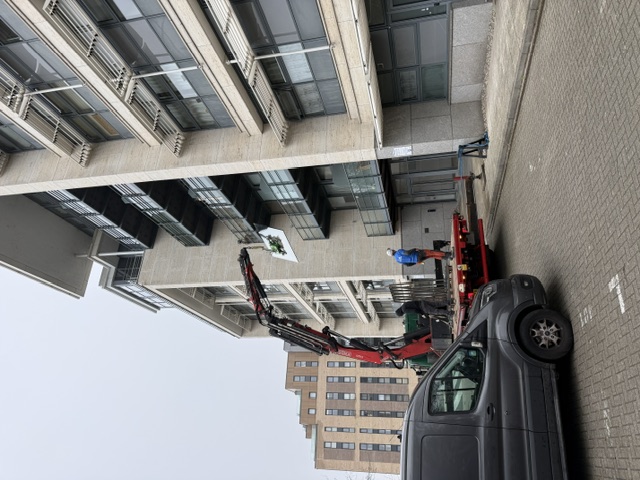
Complexity covers oversized panels that need a crane, minimal-frame systems with tight tolerances, and any automation or access control. Lead times, fabricator capacity and hardware availability also move prices and dates, so we confirm these before you commit.
Choosing a Glass Door Installer in Chelsfield
Knowing what drives the price only helps if the firm fitting the door can deliver the specification on site. The installer has to understand structural loading, hardware integration and how the frame meets the floor, walls and finishes around it. That is the difference between a door that still runs sweetly in ten years and one that drops, leaks and sticks.
Questions worth asking any Chelsfield installer include:
- Specification: can they justify the glass thickness, locking gear and seals against the relevant British Standards and the exposure of your site?
- Coordination: will they work with your builder, electrician and any smart-lock supplier so there are no cold bridges or condensation at the junctions?
- Quality control: how do they check tolerances and fixings, and do they test for water and air leakage once the door is in?
Pick the firm whose written method matches the performance you have asked for, and ask for FENSA or equivalent certification on completion.
Find out more about our Chelsfield glaziers and the other work we do locally.
Frequently Asked Questions
How Do Glass Doors Affect Noise Levels From Busy Chelsfield Streets?
The effect depends on how the door is specified. A standard double-glazed unit gives a modest improvement over an old single-glazed door, but a laminated acoustic interlayer, asymmetric pane thicknesses and a wider cavity can take a door set into the 35 to 45 dB Rw range, which turns road noise into a background murmur. The frame and seals matter as much: a thermally broken profile, continuous gaskets and a sealed threshold stop sound leaking around the glass. Doors are often the weak point in a façade, so upgrading them has a noticeable effect on a room facing a main road.
Can I Add Smart Locks or Access Control to My Glass Doors?
Yes, and it is far easier to design in from the start than to retrofit. We specify lock cases and strikes made for toughened or laminated glass, surface-mounted or through-glass, with the cable route planned before the panels are made. The lock then pairs with a keypad, RFID fob, phone app or a cloud platform that logs entries and manages who can open the door. For shops and offices the key decision is fail-safe or fail-secure behaviour during a power cut, which must agree with your fire strategy.
What Maintenance Do Glass Doors Need to Stay Clear and Scratch‑Free?
Glass doors are low-maintenance rather than no-maintenance. Clean with a non-abrasive glass cleaner or warm soapy water and a microfibre cloth; never use scouring powders, dry paper towels or a blade, which leave fine scratches. Vacuum grit out of tracks and hinges, because a sliding panel will otherwise grind it into the glass. Check seals yearly so debris is not migrating onto the pane. A hydrophobic coating applied at manufacture makes rain bead and roll off, which cuts cleaning frequency.
Are There Privacy Options for Overlooked Chelsfield Terraces and Townhouses?
Several, and they can be mixed on the same door. Acid-etched or sandblasted glass gives permanent diffusion with little loss of daylight, and can be graded so only the lower part is obscured. Applied films come in gradients and patterns and are easy to change later. Switchable smart glass turns from clear to opaque at a switch, which suits a bathroom or ground-floor bedroom. A light tint or spectrally selective coating cuts the view in from outside by day while keeping the view out, and reduces glare and solar gain too.
How Do Glass Doors Impact Home Resale Value in Different Chelsfield Areas?
Buyers in Chelsfield respond to light, open ground floors, and a good glass door is one of the cheaper ways to deliver that. Agents often quote a small premium, typically a few per cent, for a well-executed glazed rear elevation. Around Green Street Green, Crofton and Locksbottom, quality aluminium doors with U-values at or below 1.4 W/m²K read as a proper upgrade. In quieter suburban roads, buyers care more about security, so PAS 24 hardware and laminated glass carry weight. A cheap, draughty system can count against a house rather than for it.
Summary
Modern glass doors are secure, warm and well suited to the mix of Victorian, interwar and contemporary homes in Chelsfield. Laminated or toughened glass, multi-point locks and Secured by Design standard hardware look after security, while low-E glazing and warm-edge spacers keep bills under control. If you are planning a patio door, bi-fold or internal glass partition, call us for a free survey and quotation.